The Evolution of Time-Limited Challenges That Integrate Baccarat Gameplay With Broader Casino Ecosystem Rewards
Written by Logan Butler · Jul 9, 2026
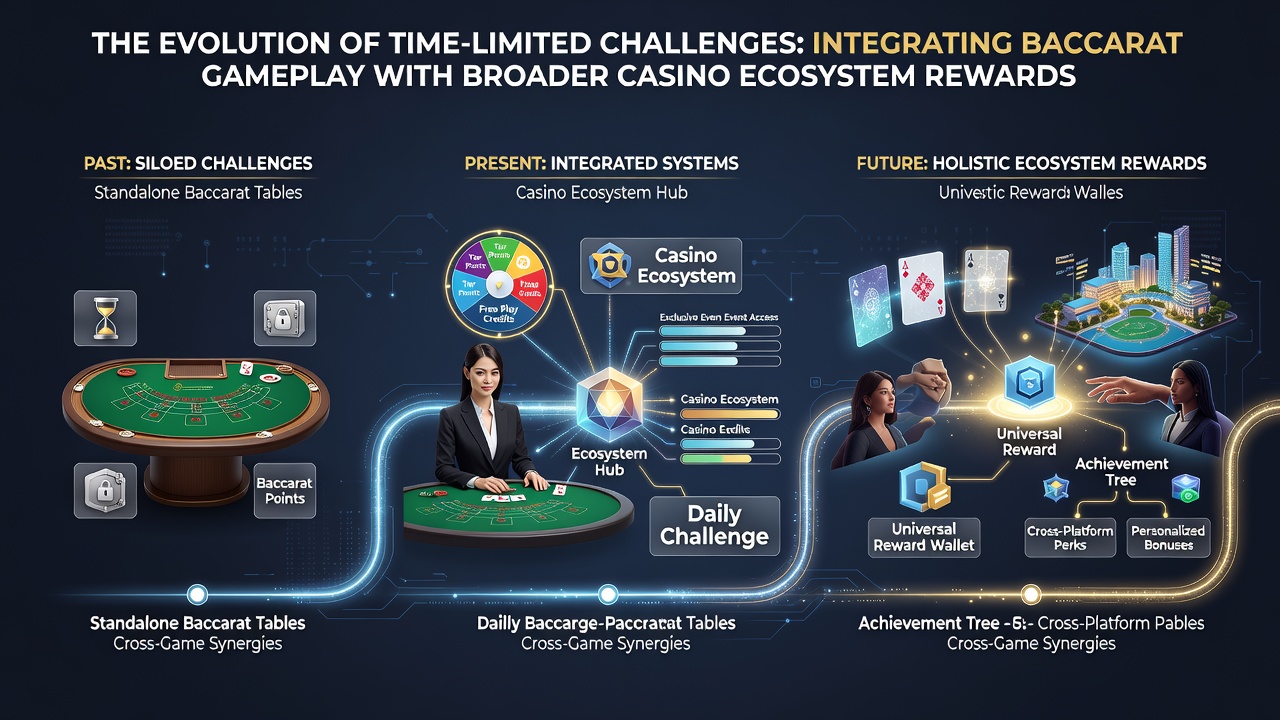
The Evolution of Time-Limited Challenges That Integrate Baccarat Gameplay With Broader Casino Ecosystem Rewards
Time-limited challenges in baccarat began appearing in land-based casinos during the late 1990s as operators sought ways to draw repeat visits through structured gameplay windows. These early formats typically involved fixed-hour sessions where players accumulated points based on total wagers placed at baccarat tables, and the points fed directly into property-wide loyalty systems that awarded credits across slots, table games, and dining outlets. Data from the Nevada Gaming Control Board shows that such promotions expanded steadily between 2005 and 2015 as casinos tracked participation metrics through centralized player databases.
Early Integration Patterns
Operators soon recognized that baccarat's high-stakes profile created natural opportunities for cross-ecosystem linkages. A player completing a two-hour baccarat challenge could receive tiered rewards that unlocked hotel upgrades or spa access, while the same activity simultaneously contributed to a casino's overall player-retention score. Researchers at the University of Nevada, Las Vegas documented how these systems evolved from simple point multipliers into layered incentive structures that adjusted reward values according to time-of-day participation and table occupancy levels.
By the early 2010s, several properties began testing challenges that spanned multiple days yet remained bounded by weekly reset cycles. Participants who met volume thresholds during the window earned ecosystem credits redeemable for non-gaming amenities such as golf privileges or concert tickets, and the credits carried expiration dates aligned with the challenge calendar. This approach allowed casinos to maintain steady traffic while preventing reward stockpiling that could dilute perceived value.
Digital Expansion and Real-Time Tracking
The shift toward online and mobile platforms accelerated the complexity of these challenges after 2015. Software platforms introduced live dashboards that displayed remaining time, current standing, and projected ecosystem rewards based on continued play. Integration with broader casino networks meant that baccarat activity in a digital environment could influence physical property offers, such as complimentary meals or event access at partnered venues. Figures from the American Gaming Association indicate that multi-channel reward systems grew by approximately 34 percent between 2018 and 2023 as operators standardized data-sharing protocols across properties.
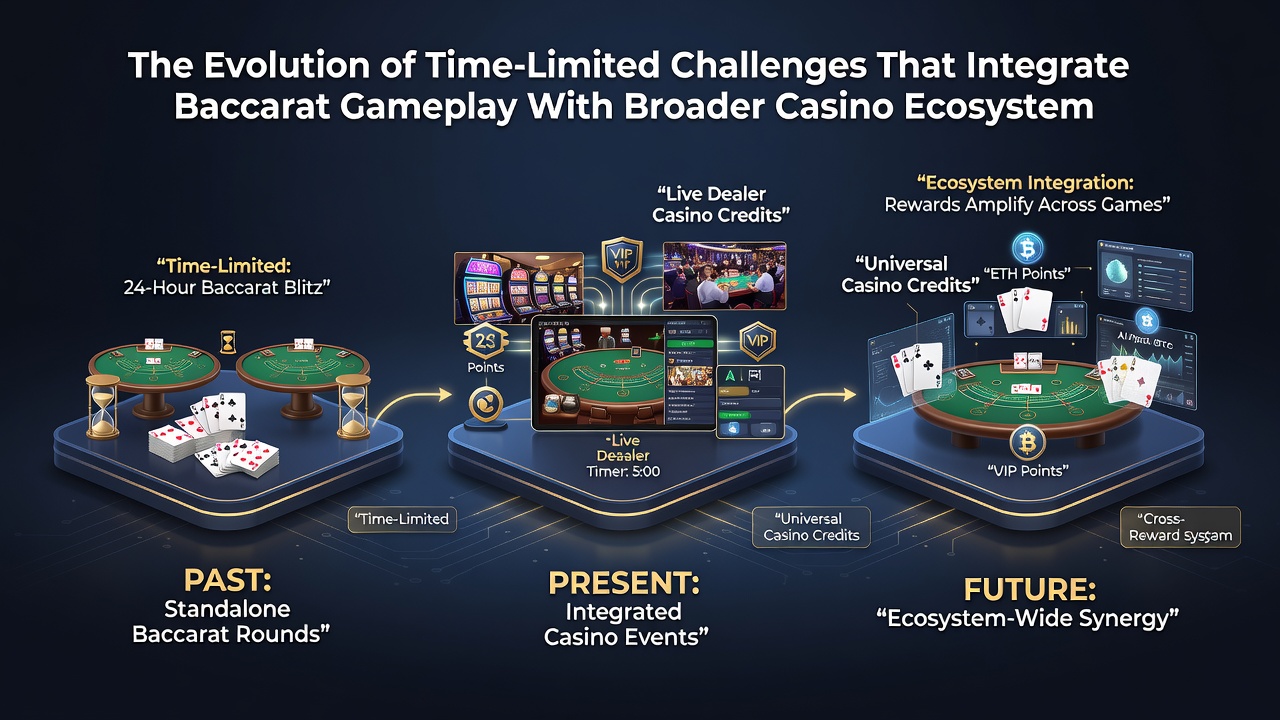
Time-bound mechanics also incorporated seasonal triggers tied to sporting calendars and holiday periods. A challenge running from mid-June through early July might award additional ecosystem points for baccarat hands played during specific evening windows, with those points convertible into merchandise or travel packages offered by affiliated brands. Such structures required precise synchronization between gaming software, loyalty engines, and external partner systems to ensure accurate credit allocation before the window closed.
Developments Through Mid-2026
Regulatory updates in several jurisdictions prompted further refinement of challenge design. In March 2026, operators in select markets adjusted time-limited formats to include mandatory disclosure of reward conversion rates and expiration policies. These changes coincided with expanded use of predictive analytics that adjusted challenge difficulty and reward tiers in real time based on aggregate player behavior. Observers note that the adjustments maintained compliance while preserving the core structure of ecosystem-linked incentives.
July 2026 saw several casino groups roll out challenges that combined baccarat play with broader destination rewards, including airline miles and hotel stays at partner properties outside the primary gaming market. The campaigns used unified player profiles to track progress across desktop, mobile, and live-table environments, ensuring that activity completed in any channel contributed to the same time-limited total. Industry reports indicate that such unified tracking reduced reward duplication while increasing overall participation rates during the promotional windows.
Technical and Operational Shifts
Backend infrastructure improvements allowed operators to implement dynamic scaling of challenge parameters. When participation exceeded projected thresholds, systems automatically extended reward pools or introduced secondary challenges that funneled additional ecosystem benefits to high-volume players. Conversely, low-engagement periods triggered targeted notifications that highlighted remaining time and available ecosystem redemptions. These operational adjustments relied on continuous data feeds from baccarat tables, digital platforms, and loyalty databases to maintain balance between challenge accessibility and reward sustainability.
Cross-property partnerships further expanded the scope of ecosystem rewards. A player completing a baccarat challenge at one venue could receive credits applicable at sister properties located in different states or countries, provided the time window remained active. This geographic flexibility required standardized data formats and secure transfer protocols, elements that matured significantly between 2020 and 2026 according to records maintained by the Casino Regulatory Authority of Singapore.
Conclusion
The progression of time-limited baccarat challenges reflects ongoing adaptation between gaming operators, loyalty platforms, and external reward partners. From early point-based sessions confined to single properties, these formats have developed into synchronized systems that link gameplay across channels while distributing benefits throughout wider casino ecosystems. Continued refinement of tracking technology and regulatory compliance mechanisms suggests that future iterations will maintain the same core structure of bounded time windows and layered ecosystem incentives.